
Hail Country Starts Just Up I-35: Is Your Waco Roof Ready for the Next Storm?
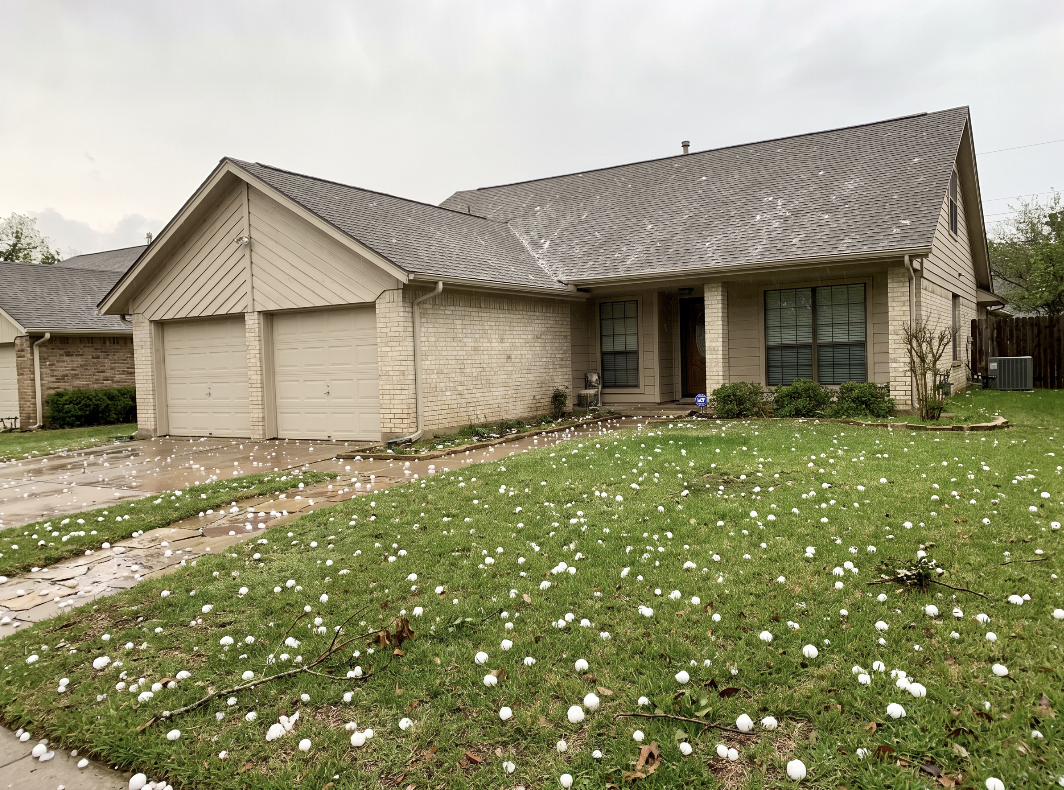
Waco sits along one of Texas’s busiest severe-weather corridors. The National Weather Service in Fort Worth keeps tornado records for McLennan County going back to 1880, and hail comes with the territory. Storms across Central and North Texas often track southwest to northeast along the I-35 corridor, from Waco toward Hillsboro, Corsicana and on to the Metroplex. In April, one of those systems brought hail up to baseball size to parts of the Metroplex.
The lesson for Waco homeowners: you don’t have to be the one who got hit last time to be next.
Why proactive beats waiting for a leak
Hail damage isn’t always obvious. Even smaller hail, around an inch, can bruise shingles and knock off granules in ways that are hard to see from the ground. Damaged roofs can hold on for months before leaking, by which time the damage has spread and it’s harder to link to a specific storm.
What to check
- Granule loss. Dark circular spots, bare patches, or granules collecting in gutters and at the base of downspouts.
- Dented flashing and vents. Soft metals show hail hits clearly. Check roof vents, flashing, gutters and downspouts.
- Soft spots or bruising. Shingles that feel spongy or show dimples.
- Cracked or missing pieces, including chipped tile or missing shingle tabs.
- Collateral clues: dents on your AC unit fins, the garage door, a fence or outdoor furniture.
- Attic and ceiling checks, looking for water stains or daylight where it shouldn’t be.
Hail size isn’t the whole story
It’s tempting to judge a storm by the size of the stones, but damage also depends on wind, how old the roof is, and what it’s made of. Wind-driven hail can hit at an angle and hit harder, and an older roof is generally more vulnerable than a newer one. That’s why an inspection is more useful than a guess based on what you saw fall.
What a good inspection includes
- A walk of the whole roof surface, not just one slope
- Attention to the metal parts, like vents and flashing, where hail marks show up clearly
- Dated photos of anything found
- A plain-language explanation of what’s damage and what’s normal wear
- No pressure to sign anything
What to do if you find something
- Take dated photos.
- Get a professional inspection.
- Read your policy and ask your carrier about your deadline. Many Texas policies allow about a year, but some allow less.
- File promptly if there’s damage.
Build a habit
After any storm with hail reported near you, take a few minutes to walk the property. Check the yard for debris, look at your gutters and downspouts, and glance at the roof from the ground. You don’t need a ladder. Catching something early makes it easier to document and cheaper to fix.
A Waco companion to our DFW hail post
If you read our DFW hail-claim post, this is its Waco-focused counterpart: the same storm-season realities, aimed at McLennan County homeowners. We serve Waco through our Dallas-Fort Worth and Waco team, and you can start with a roof repair inspection.
Book a free storm-readiness roof inspection. Call 800-306-6953 or visit empoweryourhome.com.

join our good energy list
Get practical tips and insights delivered straight to your inbox each week.
Become An Empowered Homeowner
Upgrade or install solar, HVAC, roofing & electrical for a more energy efficient home today.
