
This Year’s Wetter Monsoon Means Drainage Problems, Not Just Storm Damage, for Tucson Roofs
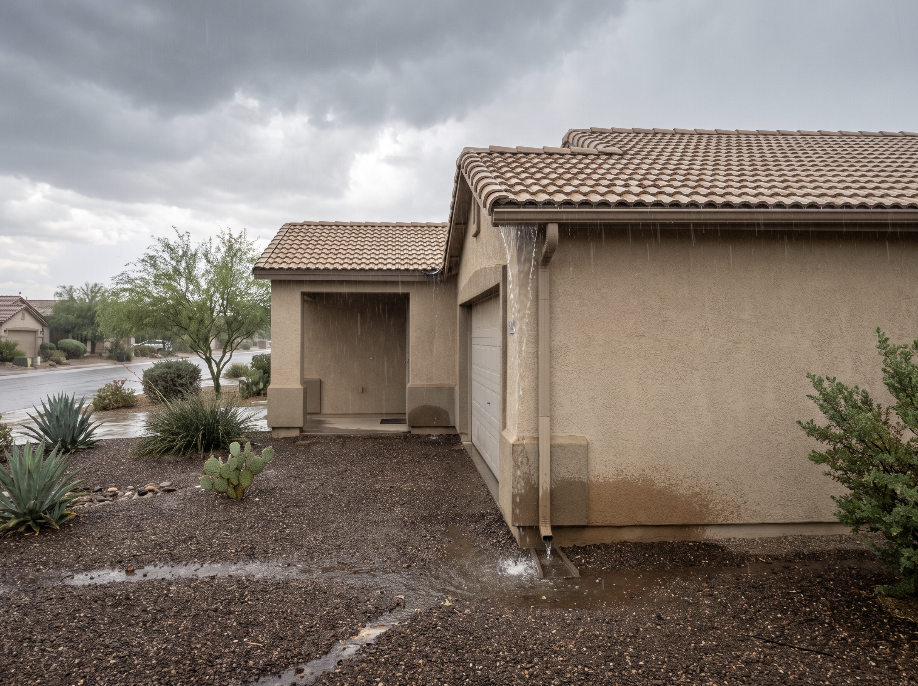
Most monsoon advice is about wind and hail. This year’s storm story in Tucson has been about water: a monsoon that started with a record and stayed wetter than normal. On June 15, Tucson International Airport recorded 0.40 inches, more than double the previous record for that date. Reports in mid-July put season totals near 48% above normal, and flash flood watches and swift-water rescues followed through the summer.
All that water has to go somewhere. When your roof’s drainage can’t keep up, the problem isn’t a blown-off shingle. It’s a slow leak.
Where drainage goes wrong
- Gutters and downspouts overwhelmed by heavy, fast rain, then packed with debris after.
- Ponding on flat or low-slope roofs. Water standing more than about 48 hours after rain is a warning sign.
- Blocked scuppers and drains, the small openings on flat roofs that let water out.
- Valleys clogged with washed-in debris that push water sideways under roofing.
- Runoff pooling near the foundation from downspouts that discharge too close to the house.
Why flat and low-slope roofs need extra attention
Many Tucson homes have flat or low-slope roofs, and they work differently from steep ones. Water doesn’t run off quickly, so it depends on drains, scuppers and a slight slope to move it. If a scupper is blocked or a low spot forms, water can sit on the surface, working into seams, sealant and any small crack.
Water that stays put also adds weight and gives debris a place to collect, which makes the next storm harder on the same spot.
The “check this before it becomes a leak” list
- Ceiling stains, damp spots or a musty attic smell
- Standing water on flat sections a day or two after rain
- Sagging or pulling-away gutters
- Granules piled at the bottom of downspouts
- Cracked or lifting sealant around vents, skylights and penetrations
- Soft or spongy spots underfoot if a pro is on the roof
Look from the ground or with binoculars, and stay off wet or steep roofs.
After a storm: a quick routine
- Walk the perimeter once the rain stops, looking for overflow marks, pooling water and washed-in debris.
- Check downspouts to see that water is leaving the roof and moving away from the house.
- Look inside, including ceilings, closets and the attic if it’s safe to access.
- Take dated photos of anything that looks new, so you can compare later.
Why now
The official monsoon season ends September 30, but afternoon storms can still pop up early next week. And NOAA’s outlook for this winter leans wetter than normal across the Southwest. Getting drainage sorted while the weather is dry is a lot cheaper than fixing a leak in a downpour.
When to call a pro
Call if water has been ponding for days, you find stains inside, gutters are pulling away, or you can’t safely reach a clogged scupper or valley. We inspect roofs across Tucson, including Oro Valley, Marana, Sahuarita, Vail and Green Valley. A small roof repair now, like clearing a scupper or resealing a penetration, usually beats a bigger one later.
Book a free roof drainage inspection. Call 800-306-6953 or visit empoweryourhome.com.

join our good energy list
Get practical tips and insights delivered straight to your inbox each week.
Become An Empowered Homeowner
Upgrade or install solar, HVAC, roofing & electrical for a more energy efficient home today.
