This Winter Could Come Early: Why Fall Is the Time to Get Solar Installed in Flagstaff, Prescott & Pinetop
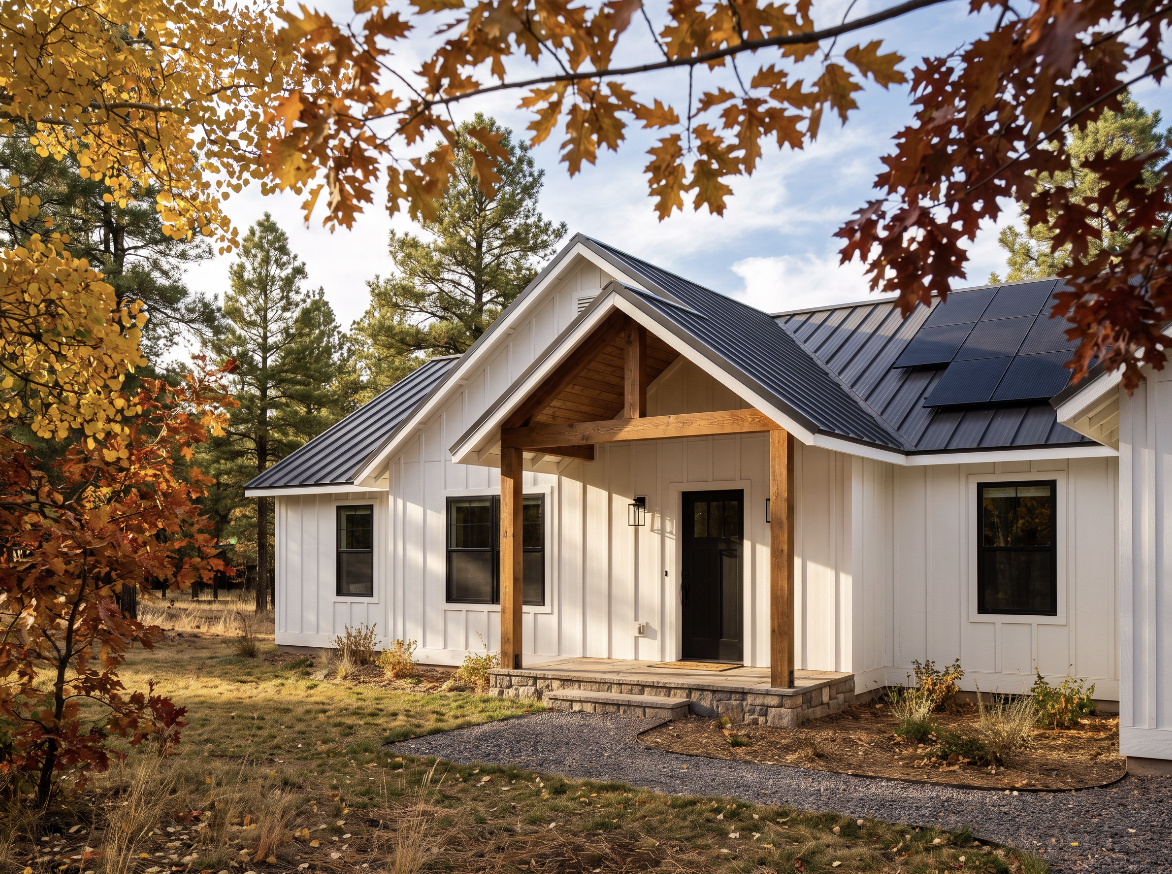
Forecasters are watching a strong El Niño develop for winter 2026 to 2027. NOAA’s outlook tilts toward above-normal precipitation across the Southwest during the core winter months, which for Arizona’s high country can mean more snow. It’s an outlook, not a promise. There’s uncertainty about how strong the effects will be, and it doesn’t tell us when the first snow falls.
But you don’t need a perfect forecast to see the problem. In Flagstaff, Prescott and Pinetop, install season has a hard stop.
Why timing matters more up here
Installing solar takes more than a crew and some panels. A typical project runs through several stages:
- Site survey and design
- Permits, plus HOA approval where needed
- Installation, which needs a safe, reasonably dry roof
- Inspection
- Utility permission to turn on, which can add weeks depending on the queue
Once snow starts, roof work slows or stops, and inspections and scheduling can slip. A project you sign in September or early October has room to breathe. One signed in November may not switch on until spring. That’s a real cost if you’re hoping to see savings this winter.
What slows a project down
Any one of these can add days or weeks, and in the mountains they can stack up:
- Weather days. Snow, ice, high winds and cold mornings all limit safe roof work.
- Permit and inspection queues. Local offices can back up in busy seasons.
- HOA reviews, where required.
- Utility interconnection. Permission to operate is a separate step from the install itself.
- Roof repairs. If your roof needs work first, that adds time before panels go up.
What about winter production?
Days are shorter, but cold, clear high-altitude days can be great for panels. Cold actually improves panel efficiency. The point here is simply that a system that’s up and running when winter arrives is a system producing.
What a fall project looks like
Every project is different, but the order of steps is usually the same:
- First: a consultation and site survey, so the design fits your roof and your usage.
- Next: permits and any HOA approval, which run in the background while you wait.
- Then: installation, ideally on a dry, safe roof.
- After: inspection and utility permission to turn on.
Starting early doesn’t just avoid snow. It gives every one of those steps some breathing room.
Prepare your roof first
Solar panels go on for decades, so the roof underneath should be up to it. If your shingles are worn or you’ve had leaks, it’s smart to fix them before installation. In the mountains, ask about how the roof handles snow load and ice, and whether any repairs should happen before panels go on.
What waiting can cost you
A system that’s live in December is producing in December. A system that gets delayed to spring misses those months, along with any bill savings that go with them. It’s not a huge number in the grand scheme, but it’s the kind of cost that’s easy to avoid with a little planning.
A smart way to hedge
If you’re not ready to install this fall, you can still get ahead. Design, permitting and utility paperwork can often move forward before the crew arrives, which puts you closer to the front of the line when the weather allows.
Ask your installer what happens if snow arrives before install day. A good answer includes a realistic reschedule plan and clear communication about how long a delay could last.
How to plan
- Book a consultation now, while there’s time to schedule around weather.
- Ask for a realistic timeline, from signing to turn-on, not just installation day.
- Check your roof first. If it needs work, sort that out before panels go up.
- Ask about your utility. Depending on where you live, that could be APS or a local cooperative.
- Ask about a battery if backup power matters to you. Winter storms can knock out power in the high country.
Questions to ask your installer
- How long does a typical project take from signing to turn-on in my town?
- What happens if snow arrives before install day?
- Can design and permitting move forward before the crew is scheduled?
- Which utility will I be interconnected with, and what’s their typical timeline?
- Is my roof ready, or should it be repaired first?
Common questions
Is winter a bad time to have solar? No. Systems keep producing through winter, and clear, cold days can be productive. The challenge is timing the install.
Can I install in winter anyway? Sometimes, on a good weather window. But it’s less predictable, which is why a fall start is easier.
Do I need to wait for the forecast? No. The outlook is a reason to plan early, not a reason to wait and see.
Explore solar and storage, solar panel installation, and our Northern Arizona page.
Book a free solar install timeline consultation. Call 800-306-6953 or visit empoweryourhome.com.

join our good energy list
Get practical tips and insights delivered straight to your inbox each week.
Become An Empowered Homeowner
Upgrade or install solar, HVAC, roofing & electrical for a more energy efficient home today.
