
Burn Scars and Fall Storms: A Different Kind of Roof Risk in Northern Arizona
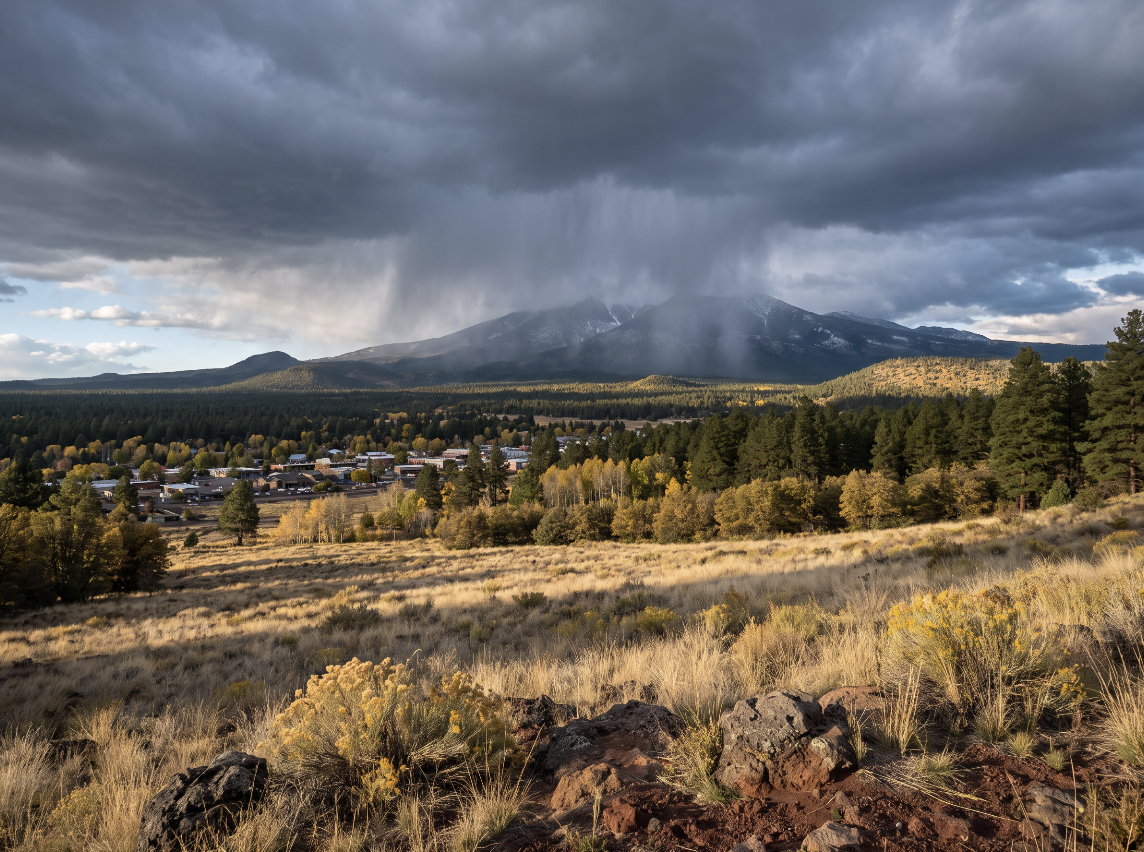
On July 18, 2026, storms brought what a Flood Control District of Coconino County official called “unprecedented rainfall across burn scars,” with upwards of 4 inches recorded. She warned that “there’s nowhere for it to go now except to flow downhill and into the neighborhoods.” No major flooding had occurred at the time, but saturated ground means the risk carries into fall storm season.
Why burn scars are different
Land burned by wildfire, like the areas from the Pipeline Fire (2022) and the Schultz Fire (2010) near Flagstaff, doesn’t absorb rain the way healthy ground does. Vegetation is gone, and burned soil can repel water. Runoff moves faster and carries more ash, sediment and debris. Coconino County has invested about $120 million in watershed restoration and flood mitigation, but that system has limits, and it doesn’t cover what happens on your own property.
This is different from the snow-load story. It’s about water and debris moving quickly toward homes.
What that means at the house
- Gutters and downspouts. Are they sized for heavy bursts, and do they drain well away from the foundation?
- Roof valleys. Debris carried by wind and water collects here first, and blocked valleys push water under roofing.
- Pine needles and leaf litter. They pile up fast in the high country and clog everything.
- Ground-mounted solar. Check footings and the ground around the array for erosion and runoff paths.
- Conduit and wiring runs that sit in low spots where water collects.
Before a storm, and after
Before:
- Clear gutters, downspouts and valleys of needles and debris.
- Make sure downspouts discharge well away from the house.
- Look at flashing, sealant and roof penetrations.
- Sign up for local emergency alerts and know your flood-risk area.
After:
- Walk the property and look for erosion, pooled water and debris.
- Check for interior stains and damp spots.
- Look at ground-mount footings and wiring runs if you have solar.
- Take dated photos of any damage.
Be realistic about what a roof can do
A roof and gutter system can’t stop a debris flow or a flash flood. If you live in or near a mapped flood or burn-scar area, follow guidance from Coconino County officials and sign up for local emergency alerts. What we can do is make sure your roof and solar system handle water the way they should: clear valleys, working gutters and intact flashing, so an ordinary storm doesn’t become an expensive leak. Prescott and Pinetop homeowners near any burn scar can use the same checklist.
A note on insurance
Standard homeowners policies often treat flood damage differently from storm damage to the roof. If you live near a burn scar or in a mapped flood area, it’s worth asking your agent what your policy does and doesn’t cover, so there are no surprises later.
See our roof repair and solar installation services, or the Northern Arizona page.
Book a free roof inspection. Call 800-306-6953 or visit empoweryourhome.com.

join our good energy list
Get practical tips and insights delivered straight to your inbox each week.
Become An Empowered Homeowner
Upgrade or install solar, HVAC, roofing & electrical for a more energy efficient home today.
